Huron Heights Lock & Key Co.
Issue 3 of 3LocksmithLondon, Ontario
Lock Replacement & Upgrade: how the work is done
When people say upgrade they usually mean a heavier lock, and there is a real scale behind that word.
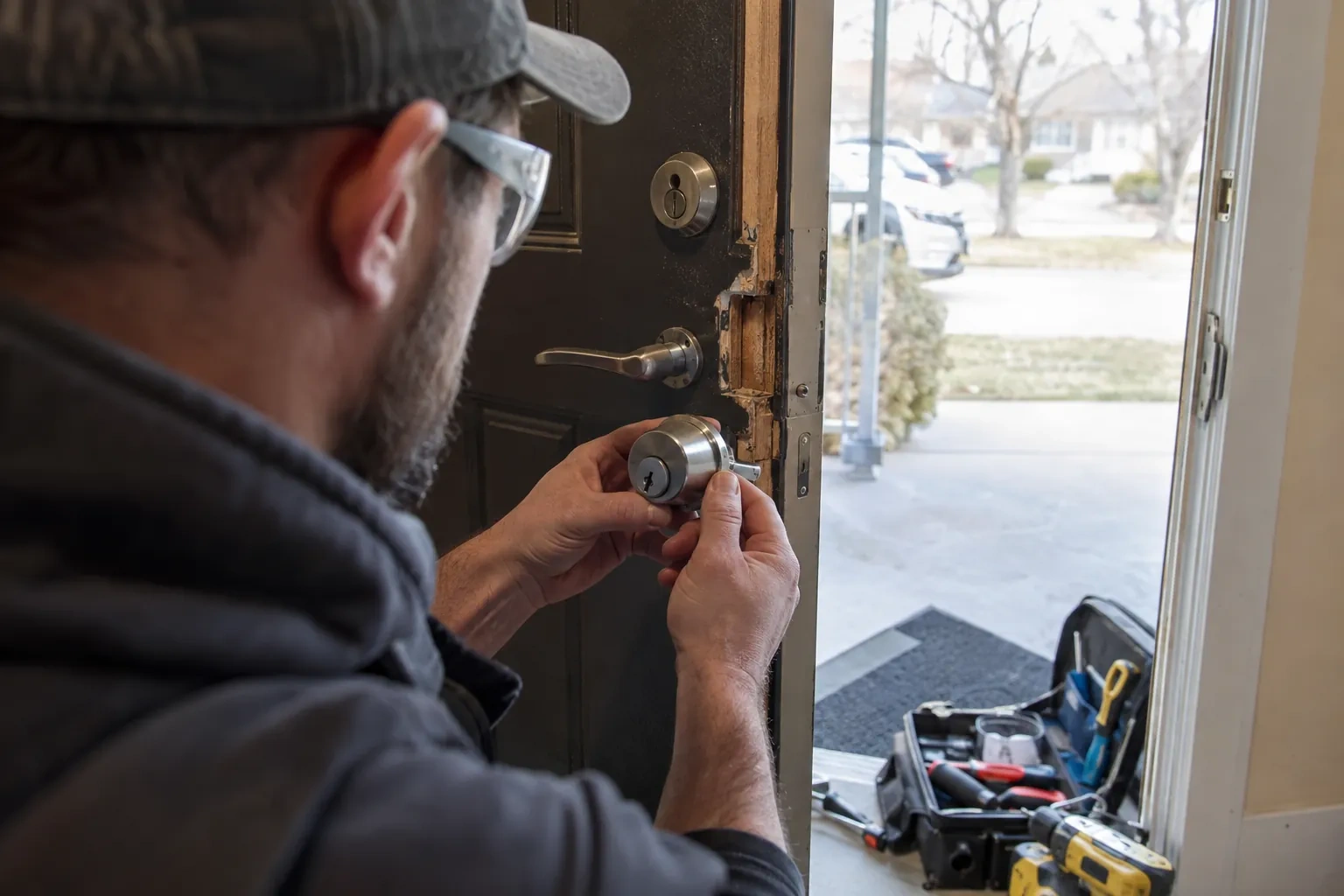
When people say upgrade they usually mean a heavier lock, and there is a real scale behind that word. Builders hardware in North America is graded to ANSI/BHMA standards, with Grade 1 the highest and Grade 3 the lightest, and residential products carry a separate label scoring security, durability and finish. A higher grade certifies stronger performance on the standard's own tests, and moving up often brings a longer hardened bolt, a sturdier housing, pins that resist picking and a strike built to anchor into the framing, though the exact features depend on the model. The locksmith explains which grade fits which door.
The door and frame around the lock
A new lock inherits whatever the door and frame are doing, so both get a look. The locksmith checks whether the door has dropped on its hinges, whether weatherstrip is pushing it out of square, and whether the bolt lands squarely in the strike pocket or rubs its edge. The pocket depth matters as well: a bolt that reaches the back of a shallow pocket is not fully thrown. Hinge screws, a jamb split from an old forced entry and a strike held by short screws are all noted, because the visit will tidy them up so the new hardware works as designed.
Taking the old hardware off without harm
Removal is done with the same care as fitting. Interior trim screws come out first, then the interior rose or thumb-turn, and the exterior housing lifts away with its tailpiece. The latch or bolt slides out of the edge bore once its two faceplate screws are released, and the old strike comes off the jamb. Painted-over screws are scored free rather than forced, seized screws are eased with a hand driver of the right size, and a stripped head is drilled out only as a last step. The bore and edge mortise are then cleaned of paint build-up and debris so the new parts seat properly.
Every lock tried the way you will use it
Before the tools go back in the van, each lock is operated from both sides with the door open, then closed, then closed hard against the weatherstrip. The latch should catch on its own when the door swings shut, the deadbolt should throw to its stop with a fingertip on the thumb-turn and no shoulder on the door, and the key should turn without lifting or jiggling. You are invited to try each one yourself and to lock up behind the locksmith. Anything that felt marginal has been adjusted, so the door you close that night behaves the same as the one you tested.