Change or rekey · London
Deadbolt Installation
The door from the garage into the kitchen closes on a passage knob with no lock at all. Anyone who opens the garage is one turn of a handle from the house, and the insurance renewal form has a question about exactly that.
Deadbolt Installation
In plain words
Most of the value in a deadbolt is on the frame side, which is why a good installation spends as much time on the jamb as on the door. The bolt is only as strong as the pocket it throws into and the screws that hold the strike. Short screws in a standard strike bite only into the thin jamb board; a reinforced strike fastened with 75 mm screws passes through that board into the stud behind, so a blow against the door meets the house rather than a strip of pine. The pocket is cut deep enough for a full throw and aligned so the bolt slides home freely.
How the visit goesSomeone tried the door last winter. The frame took it, but the strike plate is bent, one screw hole is stripped, and the bolt sits in the pocket at a slight angle. It still locks, and it still bothers you every night.
London
How the visit goes
Where the bolt should sit on the door
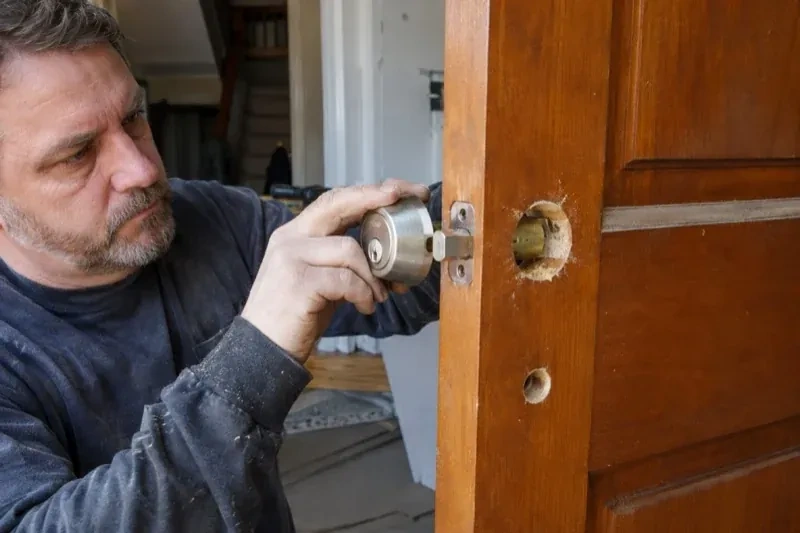
On a door with no deadbolt yet, its height is not fixed by the manufacturer but by the door in front of you. The usual spot is 140 to 150 mm above the centre of the knob, which places the bolt near the strongest part of the lock stile and keeps both locks within one comfortable reach. The locksmith checks that this height misses any glass, decorative panel, hinge line or the wood block inside an insulated door, and that the frame behind that spot is solid rather than a gap between shims. If a storm door or screen door shares the opening, the bolt's thumb-turn and cylinder have to clear it as well.
Swapping an old deadbolt in place
When an existing bolt is being replaced, the work starts by backing out the two inside screws and lifting off both housings, then removing the bolt from the edge. The bore and backset are measured against the new hardware, and any difference is dealt with before the new bolt goes in: a larger bore for a smart deadbolt, a different faceplate shape, or a spacer for a thinner door. The new bolt, cylinder and thumb-turn go on in the usual order. The old strike comes off too, the pocket is deepened if needed, and a reinforced strike with long screws replaces it, so the upgrade happens on both sides of the gap.
A frame that now holds the bolt
Behind the new strike plate is the part of the job you cannot see and will never need to think about. The pocket has been bored deep enough for the bolt to seat fully, the plate has been let into the jamb so it sits flush, and the long screws reach through the jamb into the framing behind it. On a door that had been forced or had stripped screw holes, a full-length reinforcer may sit under the strike. If you press the jamb with your palm now, it does not flex. That stiffness is what a bolt needs to do its work, and it is the reason the installation took as long on the frame as on the door.
Deadbolt Installation
In the van
- Manufacturer's bore template
- Dry PTFE lubricant
- Strike box
- Rekeying pins and key blanks
- Jamb reinforcer
What affects the quote
Same fees day, night or weekend
1Travel to the property
Distance and access are part of any call-out: a house on a suburban street and a rural property down a long road involve different driving time, and the quote says so.
2Storm door or restricted clearance
A tight storm door, a narrow lock stile or a decorative panel at bolt height can require low-profile trim or a shifted position, which is settled and quoted at the assessment.
3Rental and building requirements
Matching a building's keyway, providing keys to a landlord or fitting a lock that a condominium corporation specifies can add hardware or bench work, each shown as its own item.
Deadbolt Installation: questions
How high above the knob does the deadbolt go?
The usual position is 140 to 150 mm above the centre of the knob, which lines the two locks up and keeps both within one reach. Manufacturers' templates assume that spacing, which helps a later keypad or handleset line up, though many handlesets still need their own lower hole drilled to that model's template. The height is nudged if it would land on glass, a decorative panel or a hollow spot inside an insulated door, and to make sure the frame behind it is solid.
What happens during the visit, step by step?
The locksmith looks at the door, frame, glass and hinges, measures the bore and backset, and confirms the hardware and key plan with you. The door is bored or the old lock removed, the bolt is set to the backset, and the cylinder and thumb-turn are assembled. The strike position is marked from the bolt itself, the pocket bored, and a reinforced strike fastened into the framing. Everything is tested open and closed, keys are cut and tried, and the area is vacuumed.
What should I have ready before the locksmith arrives?
Know which doors you want bolted, what they are made of, and whether each already has a deadbolt or only a knob. A photo of the door face and edge helps. Have any existing keys to hand, decide whether you want everything on one key, and mention glass near the lock, a storm door in the same opening, or a rental agreement. If you have already bought hardware, keep the box and template together.
Change or Rekey Locks
- Lock Replacement & UpgradeThe lever on the side door droops toward the floor and rattles in your hand.
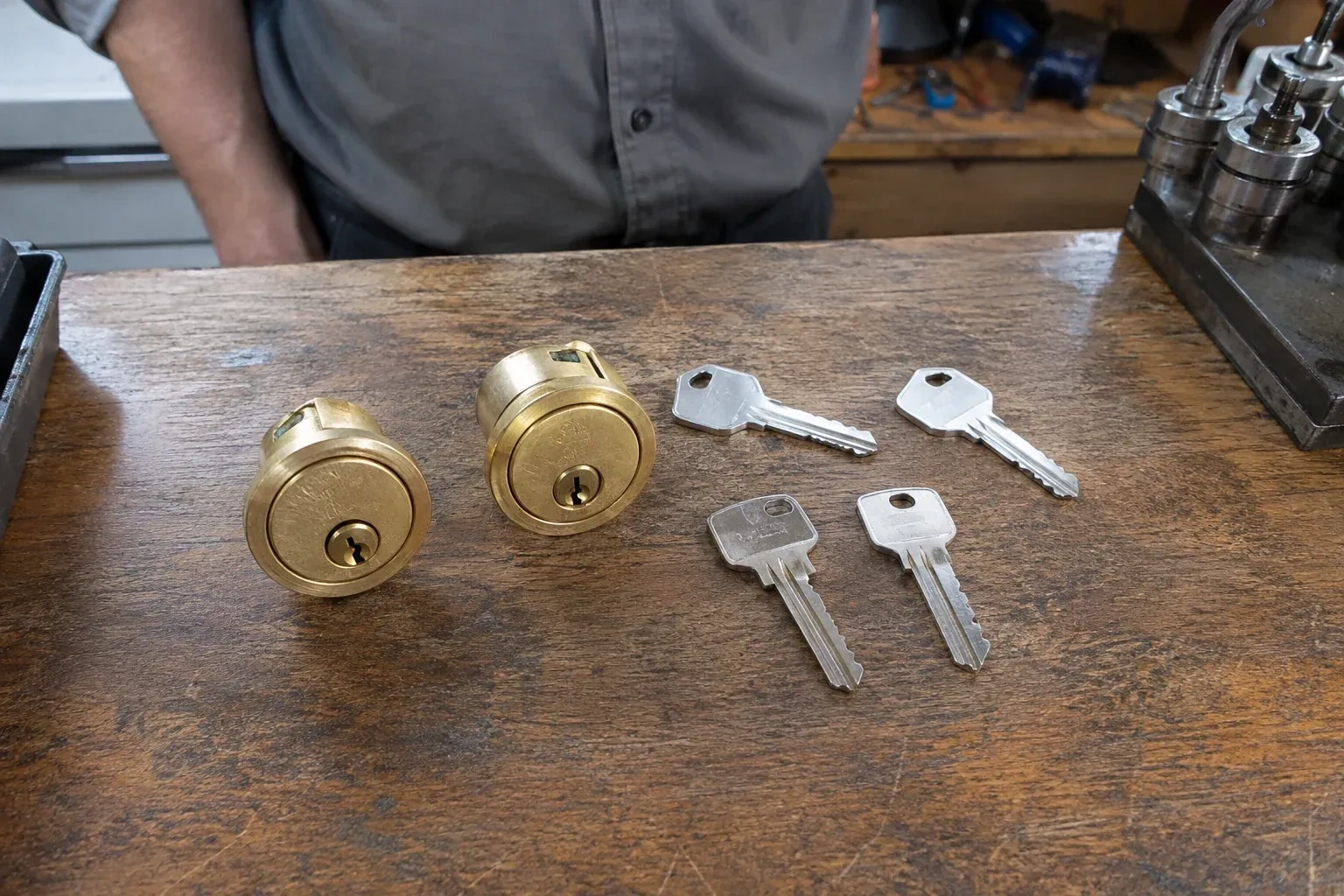
- Vintage Mortise Lock ServiceThe brass knob on the front door of your century home turns, but nothing happens on the other side.
- Smart Lock InstallationThe rental turns over every few months and each time you drive across town to swap keys, then…
Deadbolt Installation near you
Homes and businesses in London tend to need the same handful of things from a locksmith, so that is how the list is arranged: emergency openings, changing or rekeying locks, stronger hardware for people who want it, commercial doors and access, and safes. Car keys sit at the end for the households that need them.