Change or rekey · London
Lock Rekeying
Your basement tenant has given notice, and a new one arrives on the first. The lock on the separate entrance works perfectly well.
Lock Rekeying
In plain words
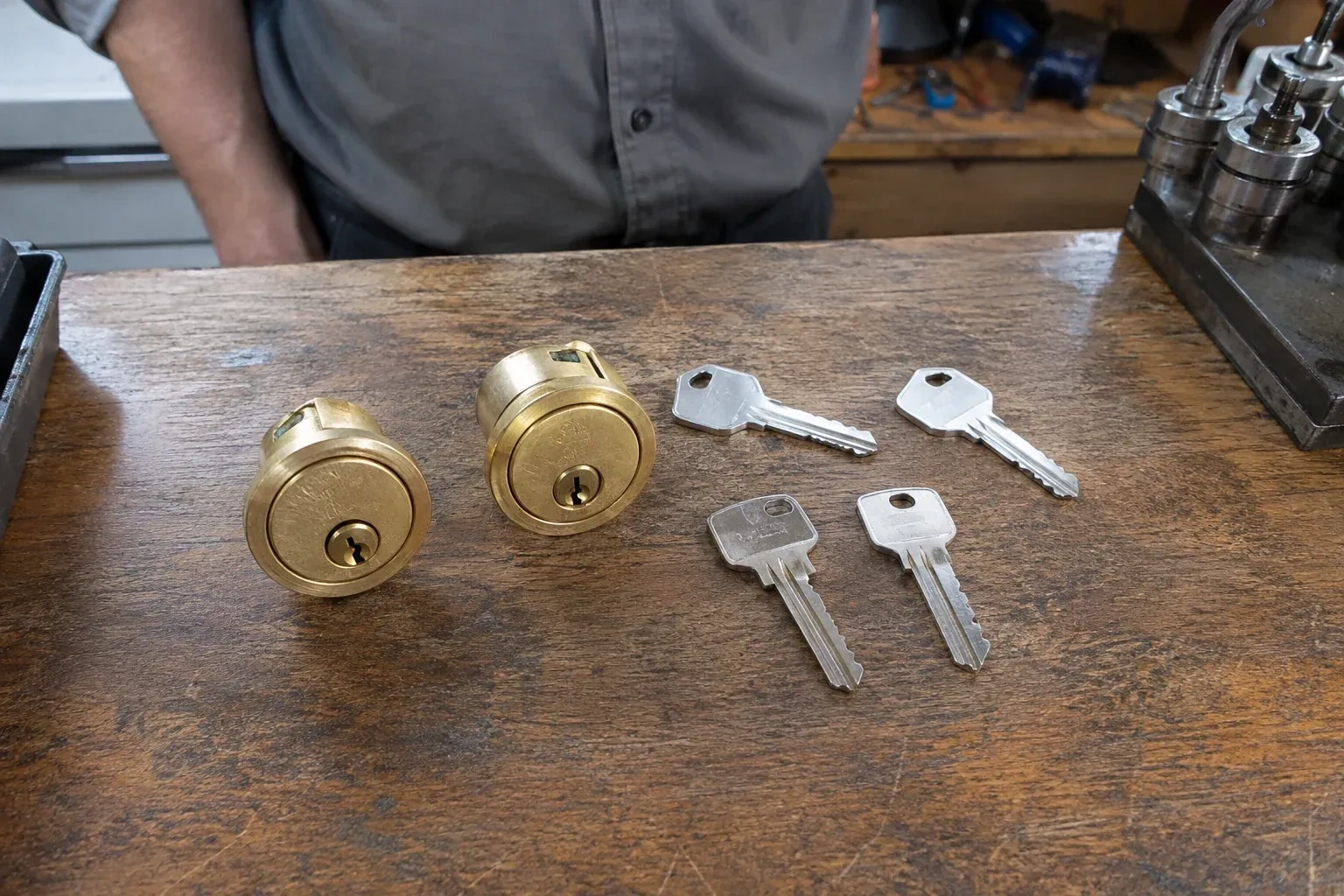
What you keep after rekeying is almost everything. The deadbolt, the handle set, the finish that matches your door hardware, the strike plate and the holes in the door all stay exactly where they are, which matters on an older door where new hardware rarely lines up with old mortises. What changes is a handful of brass pins a few millimetres long inside each cylinder, and the key in your pocket. The work is done on site, one cylinder at a time, so the house is never left with an unsecured door, and worn springs or a sticky plug can be dealt with while the cylinder is already apart.
How the visit goesYour roommate moved out last weekend. Rent is settled, the room is empty, and the key is still on their ring. You trust them, but the lock on your front door should answer to the people who actually live here.
London
How the visit goes
Deciding the key groups
Not every door in a home needs to answer to the same key, and the plan is written down before work starts. Most households want the exterior doors keyed alike so one key does everything. Some want exceptions: a basement suite on its own key, a home office or a storage room that visitors should not enter, a shed on a separate key that can be lent out without exposing the house. The locksmith sketches the groups with you, notes how many keys each group needs and who will hold them, and only then begins removing cylinders. Getting this straight first means no cylinder is pinned twice.
Taking the cylinder out of the lock
Each type of lock releases its cylinder in its own way, and the locksmith works door by door, finishing one before opening the next, so every entry stays lockable throughout. On a knob or lever set, the handle comes off after a retaining clip or set screw is released, and the cylinder slides out of the handle. On a deadbolt, the interior thumb-turn and housing are removed and the cylinder is withdrawn from the outside body. On an older mortise lock, a small set screw on the door edge is backed out and the cylinder unthreads from the case. Nothing is pried or forced; the door and trim stay untouched throughout.
The old keys are just metal now
Whatever was out in the world before today, the copy the contractor kept, the key the former roommate never returned, the ring that went missing on the bus, none of it turns a lock on your property any more. That is the whole point of the visit, and it is worth saying plainly because people sometimes keep worrying afterwards. If you still hold old keys, they can go in the metal recycling. There is no need to change the door hardware or your routine, but any keypad code known to someone whose access is ending should be deleted or changed separately, since rekeying the mechanical cylinder does not touch those codes.
Lock Rekeying
In the van
- Graded bottom pin kit
- Key blanks
- Replacement cylinder for odd keyways
- Key gauge
- Pinning tweezers and tray
What affects the quote
Same fees day, night or weekend
1Condition of the existing cylinders
A clean cylinder is repinned as it is. One with collapsed springs, a plug packed with old oil or a worn housing needs service or replacement while it is apart, and that shows separately.
2Interior doors added to the plan
Bedroom, office or storage-room locks brought onto a key are lighter work than exterior deadbolts, but each is still a cylinder to pin and test, and the count includes them.
3Access to each door being rekeyed
A rekeying visit goes smoothly when every door is reachable without delay: an empty unit, a cleared hallway, or someone available to let the locksmith into each room. Locked common areas, tenants who are out, or furniture blocking a cylinder all add time the locksmith accounts for on site.
Lock Rekeying: questions
What is a restricted keyway, and does it change anything?
A restricted or patented keyway is one whose blanks are not sold to the public, so copies can only be cut by an authorized dealer from a record of who is allowed to have them. Rekeying such a cylinder is the same operation inside, but the new keys are cut from controlled blanks and the count is logged. The benefit is that a key cannot be duplicated at a kiosk without your knowledge, which makes the record of who holds one much easier to trust.
I am a landlord. Should I rekey between tenants?
Many landlords do, and it removes the question of whether every copy came back. The locksmith rekeys the unit's cylinders so the incoming tenant holds the only working keys, cuts the copies you want, and notes the count for your move-in record. Because provincial tenancy rules expect the tenant to be handed replacement keys whenever a landlord changes a lock, the visit ends with keys for both of you and a clear list of which doors were done.
How many new keys will I get, and can I get more later?
As many as you ask for, cut on site from the fresh pinning and tested in each door they should open; two or three is typical for a household. More can be cut later. When you do, bring one of the locksmith's originals to be copied rather than a copy of a copy, since every generation strays slightly from the intended depths. If any key is a restricted type, additional copies come from the record kept for that system rather than from a hardware store.
Change or Rekey Locks
- Lock Replacement & UpgradeThe lever on the side door droops toward the floor and rattles in your hand.
- Vintage Mortise Lock ServiceThe brass knob on the front door of your century home turns, but nothing happens on the other side.
- Smart Lock InstallationThe rental turns over every few months and each time you drive across town to swap keys, then…
Lock Rekeying near you
Homes and businesses in London tend to need the same handful of things from a locksmith, so that is how the list is arranged: emergency openings, changing or rekeying locks, stronger hardware for people who want it, commercial doors and access, and safes. Car keys sit at the end for the households that need them.