Lockouts · London
Seized & Jammed Lock Opening
The lock works, but only if you lean on the door with your hip while turning the key. After a week of humid weather the bolt is jammed against the strike plate, and without that push the key stops halfway.
Seized & Jammed Lock Opening
In plain words
A jammed lock looks like one problem from outside and is usually one of three inside. The cylinder itself may have seized, packed with grit, corrosion or old grease. The link between cylinder and bolt, the tailpiece or cam, may have broken, which is why a key can spin without doing anything. Or the lock may be healthy and the bolt simply pinned against the strike by a door that has moved. Seized and jammed lock opening starts by telling those apart, because the right answer for one would damage the hardware in another. Once the culprit is known, the door is opened and the cause is repaired.
How the visit goesThe key slides all the way in, exactly as it has for years, and then refuses to turn in either direction. Yesterday it needed a small wiggle. This morning it feels set in concrete, and pushing harder only makes the key flex.
London
How the visit goes
What the weather and the house have been doing
The last questions are about recent history. Has there been a thaw followed by a hard frost, or a stretch of humid days? Is this door on the shaded or windward side, or near a salted driveway? Was the door painted, re-hung, fitted with new weatherstripping or a storm door lately? Has anyone sprayed something into the keyway? Each answer changes the likely cause, and together they tell the locksmith whether this is a one-off, such as a freak freeze, or a lock that is going to keep doing this until the door or the lubrication habit is changed. The answers also shape the advice you leave with.
Freeing a seized cylinder without forcing it
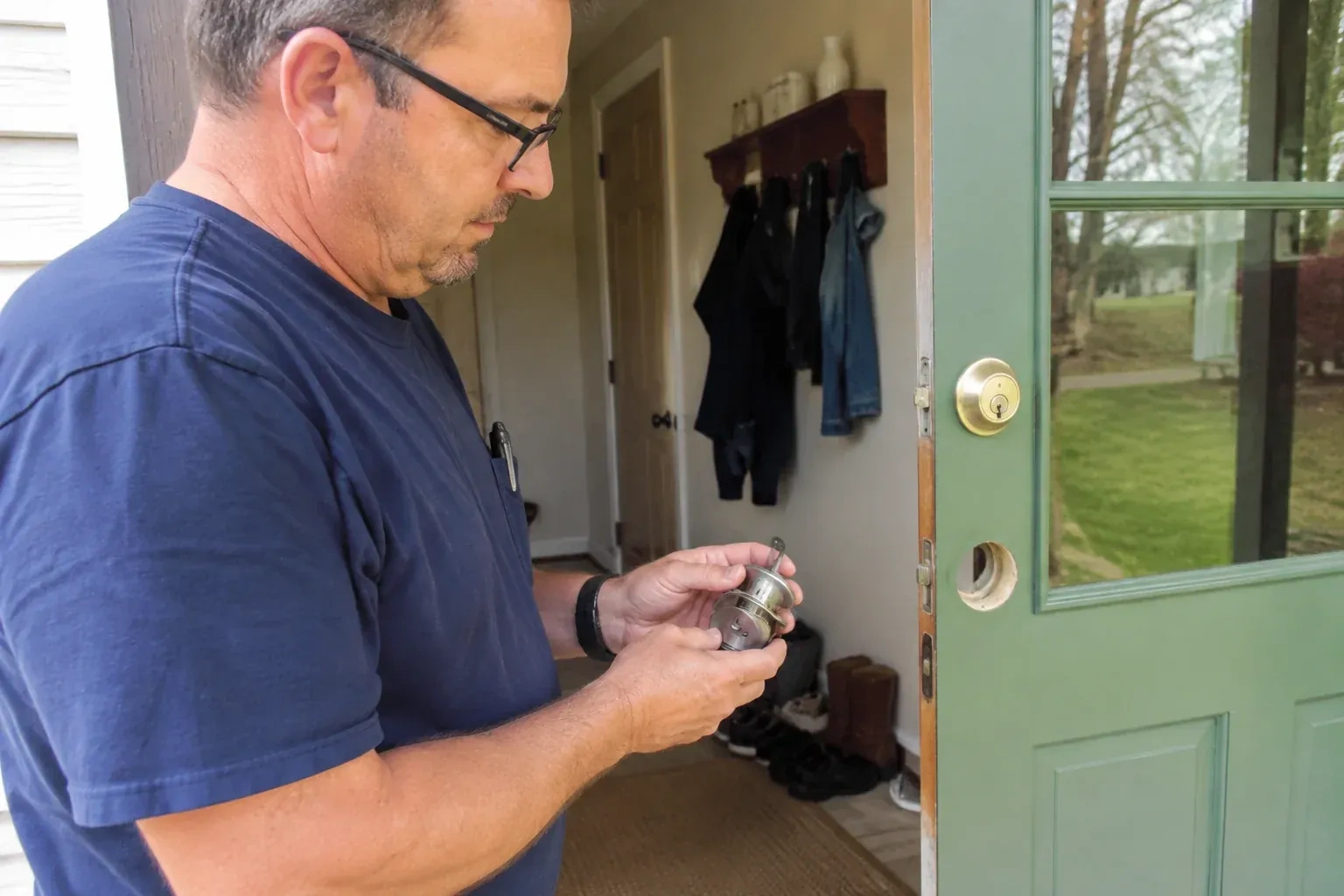
A plug that will not turn is coaxed, not wrenched. The locksmith flushes the keyway with an electronic contact cleaner to lift out grit and old residue, then applies a penetrating lubricant sparingly, since too much simply carries dirt deeper. The key is worked in small movements, in and out and a few degrees each way, letting the pins settle back into their stacks. If the cylinder cap has loosened, it is snugged so the plug sits square. As the plug begins to move, tension is kept light so nothing inside is bent. Once the door is open, the cylinder is removed for proper cleaning rather than left with lubricant masking the wear.
The early warnings to act on
A lock gives notice before it seizes, and now you know the signs. A key that needs a jiggle to seat, a plug that turns stiffly on cold mornings, a bolt that drags in its pocket, a lever that returns slowly, or a key that comes out gritty are all invitations to act while the fix is small. Stop as soon as a key begins to bend; a snapped key turns a service call into an extraction. A puff of dry lubricant or a turn of the strike screws often settles it, and a call while the lock still turns is a shorter visit than a call after it stops.
Seized & Jammed Lock Opening
In the van
- Electronic contact cleaner
- Key blanks and code cutter
- Replacement cylinder
- Long hinge screws
- Mortise case spring and hub
What affects the quote
Same fees day, night or weekend
1Inside door or outside door
A jammed bedroom or office privacy lock is generally a lighter job than a weather-exposed exterior deadbolt, and a mortise lock on an interior door sits between the two.
2Service or replace the cylinder
A cylinder that can be stripped, cleaned and rebuilt is quoted as labour with a few small parts; one corroded through is quoted with a replacement cylinder matched to your finish and keyway.
3When the call comes in
An evening, weekend or holiday call for a jammed lock costs the same amount as a weekday one. The locksmith looks at what is actually jammed once on site, and the exact figure follows from that, not from the clock.
Seized & Jammed Lock Opening: questions
Why do locks jam more in winter?
Two reasons meet in the same season. Freeze-thaw weather sends meltwater into the keyway by day and freezes it by night, and cold thickens any old grease or oil that has been sprayed into the pins. At the same time dry, heated indoor air shrinks wood doors so bolts move in their pockets. Doors on the shaded or windward side get the worst of it. A dry lubricant, a keyhole cover and a check of the strike after the first hard frost take care of most of it.
If the cylinder is replaced, can it be keyed to my existing key?
Often, yes. A replacement cylinder in the same keyway can be pinned to the cuts on the key already on your ring, so the front and back doors stay on one key and nothing else in the house changes. If the old keyway is no longer made or the key is badly worn, the new cylinder comes with fresh keys and the other doors can be rekeyed to match in the same visit.
What should I tell you on the phone?
Say what the key does: refuses to turn, spins without effect, or works only when the door is pushed or pulled. Name the lock type if you can, whether it is a deadbolt, knob, lever or an old mortise lock, and which side of the building the door faces. Mention recent weather, any spray that went into the keyway, any other door you can use, and whether anyone is inside. That short list decides the tools that come.
Lockout Services
Seized & Jammed Lock Opening near you
Homes and businesses in London tend to need the same handful of things from a locksmith, so that is how the list is arranged: emergency openings, changing or rekeying locks, stronger hardware for people who want it, commercial doors and access, and safes. Car keys sit at the end for the households that need them.