Lockouts · London
Home Lockout Service
After a week of humid weather the back door has swollen in its frame. The key turns, you can feel the bolt trying to move, but it is jammed hard against the strike plate and the door refuses to open.
Home Lockout Service
In plain words
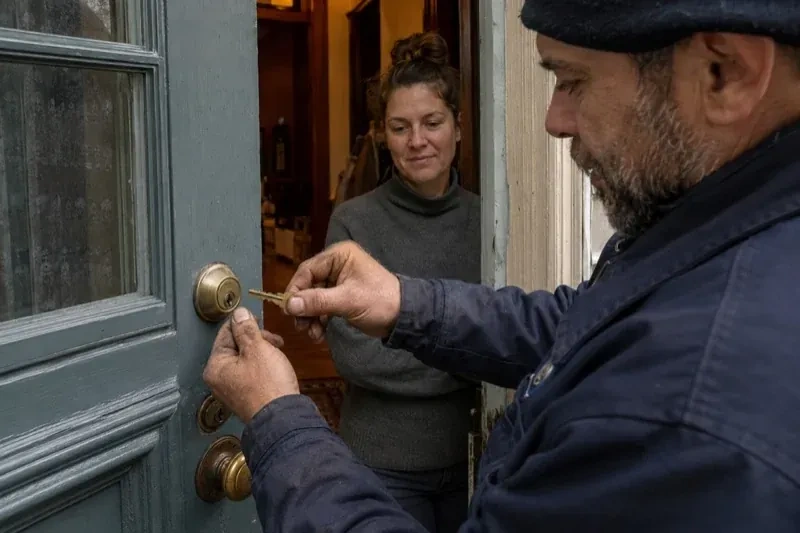
The visit follows a steady order. On the phone you describe the door, the lock and where the key went, which tells the locksmith what to bring. At the house, identification and address are checked and the lock is examined, including the door's fit in its frame. The opening itself comes next, using the least invasive technique that suits the hardware. Once inside, the lock is cycled several times to confirm it works, and you are told what was done. Any recommendation, such as rekeying because a key is missing, is explained then and carried out only if you want it.
How the visit goesYou stepped out to grab the recycling bin and the door swung shut behind you. Through the glass you can see your keys hanging on the hook by the stairs, exactly where they always are, and the latch has caught.
London
How the visit goes
Anything already damaged, and anyone inside
Two practical questions round out the first look. First, has anything been tried already? A bent latch from a credit card, a scratched cylinder from a screwdriver, or a previous locksmith's drill mark all change the approach, and the locksmith notes them so you know what was there before work began. Second, is anyone or anything inside that changes the pace: a child napping, a pet, a stove left on, a running tap? That answer sets how the opening is sequenced and whether the most careful method or the most direct one comes first. Both questions take moments and make the rest of the visit calmer.
Least invasive first, always
The opening follows a ladder. At the bottom rung are methods that operate the lock exactly as a key would: single-pin picking, raking or decoding the cylinder so the plug turns and the bolt withdraws. Next come bypasses that work around the cylinder, slipping a spring latch or reaching the inside thumb-turn with a purpose-made tool. Only when the hardware defeats all of those does drilling come into the conversation, and it is a conversation, not a surprise. Working up this ladder means the lock is intact in the great majority of cases and you close the door behind the locksmith with the same hardware you had that morning.
Ready for the next cold snap
After a winter lockout you leave with a cylinder that has been dried and dressed with a moisture-shedding lubricant, and usually a small tube of lock de-icer for the glove box or coat pocket. Keeping the storm door closed shields the main lock from freezing rain, and a simple keyhole cover on an exposed side door stops meltwater getting in during a thaw. If the door itself was frozen to its seal, the weatherstripping has been cleared and a light silicone wipe on it stops it bonding to the door again. These small habits carry most households through a whole season of freeze and thaw without another stuck morning.
Home Lockout Service
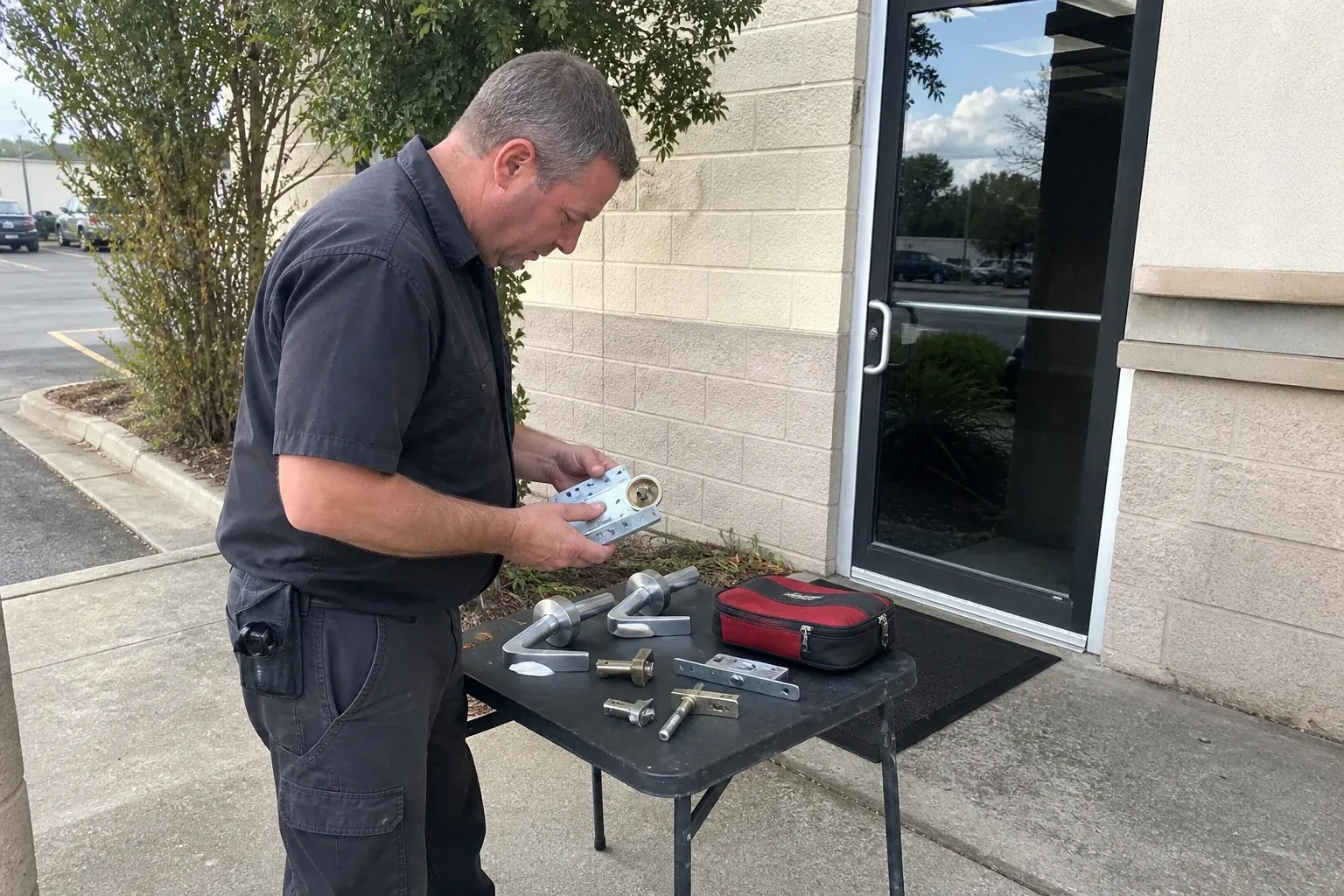
In the van
- Replacement cylinder or deadbolt
- Pick and tension tools
- Cylinder decoder
- Latch and bypass tools
- Plug spinner
What affects the quote
Same fees day, night or weekend
1How many locks need opening
One front door is the simplest case. A front door plus a garage man-door, a storm door that latched and a mailbox in the lobby is a longer visit with more hardware to work through.
2Type and grade of the lock
A builder-grade knob latch, a residential deadbolt, a mortise case in an older home and a high-security cylinder each take different tools and different amounts of time to open, and that difference shows in the quote.
3Keying other doors to match
Bringing the back door, side door and garage onto the new key after a rekey is extra work per cylinder, and simplest to arrange during the same call-out.
Home Lockout Service: questions
When does a locksmith decide to drill instead of pick?
Drilling is the last rung, reached only when the cylinder has genuinely stopped cooperating. Typical reasons are a plug seized by corrosion or a failed spring, a key snapped deep inside that blocks the pins, a high-security cylinder whose anti-pick features make picking impractical, or a lock already damaged by someone's earlier attempt. The decision is explained before the drill comes out, the hole is confined to the cylinder, and replacement hardware goes in straight afterwards.
How should I look after my lock so it stays reliable?
A little attention twice a year is enough. Follow your lock's own care instructions: many take a puff of dry graphite or PTFE lubricant worked in with the key, some a specified liquid product instead; general-purpose oils collect grit. Retire keys that have worn thin and cut fresh ones from a crisp original or the code. Snug up hinge and strike screws each spring and fall as the door moves with the humidity. A key that starts needing a wiggle is an early warning worth acting on.
How long does a home lockout usually take once the locksmith arrives?
The opening itself is often the shortest part of the visit; verifying identification, examining the lock and testing the door afterwards take a share of the time too. A standard knob or deadbolt on a well-fitting door is generally a matter of minutes, while a high-security cylinder, a frozen lock or a swollen door takes longer. If a cylinder has to be drilled and replaced, or locks are rekeyed while the locksmith is there, allow extra time for that work.
Lockout Services
Home Lockout Service near you
Homes and businesses in London tend to need the same handful of things from a locksmith, so that is how the list is arranged: emergency openings, changing or rekeying locks, stronger hardware for people who want it, commercial doors and access, and safes. Car keys sit at the end for the households that need them.