Change or rekey · London
Lock Replacement & Upgrade
The lever on the side door droops toward the floor and rattles in your hand. The latch no longer springs back on its own, so the door drifts open behind you unless you pull it shut and check it twice.
Lock Replacement & Upgrade
In plain words
After a break-in or an attempt, the door tells a story, and the new hardware should answer it. Splintered wood around the strike means the jamb gave before the lock did, so the repair pairs a heavier deadbolt with a reinforced strike and 75 millimetre screws that reach the framing behind the jamb. A bent bolt or cracked housing is replaced with a graded deadbolt whose bolt has a hardened core. A knob lock that was bumped or forced is swapped for a set with better pins. The aim is a whole opening that resists force, not merely a shinier lock.
How the visit goesThe century home's original mortise lock takes a key the size of a spoon, sticks in humid weather and has worn its strike to a groove. You want a lock that works every day without giving up the old door.
London
How the visit goes
Measuring the existing preparation
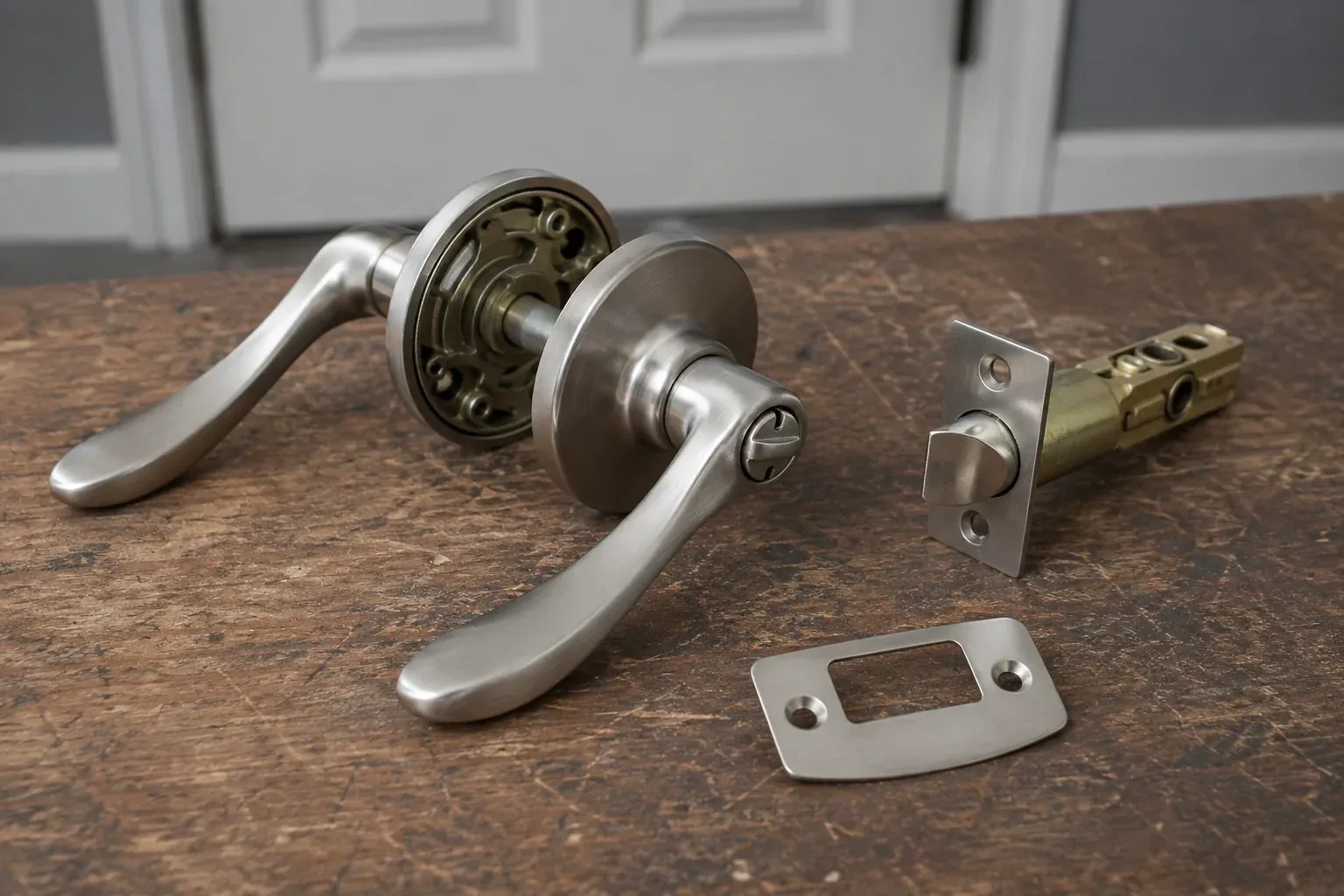
Before any product is chosen the door is measured. Backset first, the distance from the door edge to the centre of the bore, which on most doors here is 60 or 70 millimetres. Then the cross-bore diameter, the edge-bore size, the shape of the latch faceplate, the door thickness and the handing. The strike cut-out and any glass, trim or storm door that limits where hardware can sit are noted too. These few numbers decide which locks will drop straight into the door and which would need a filler plate, an extension kit or fresh drilling, so they are written down before the catalogue is opened.
Keying the new locks to one key
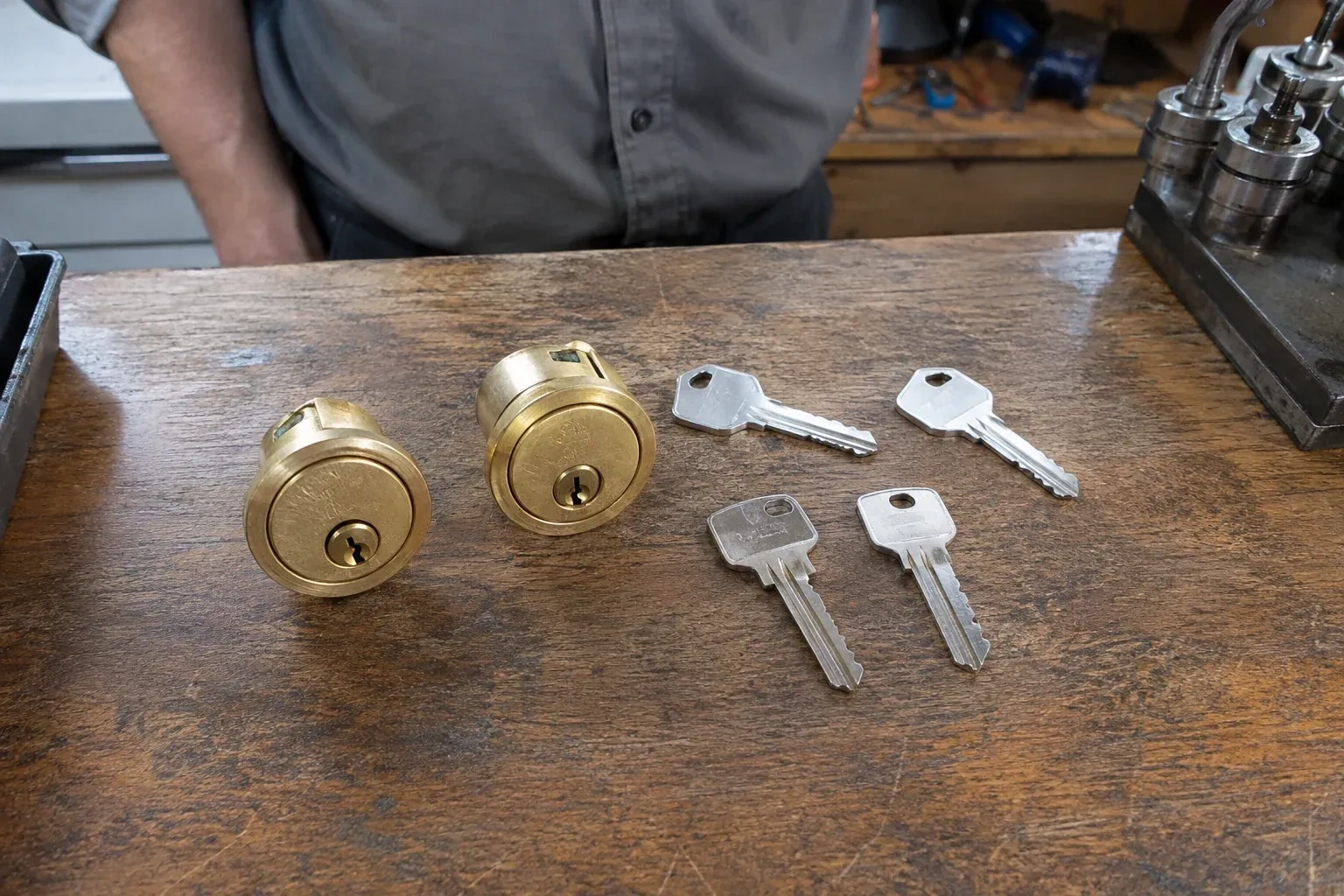
New cylinders arrive on random keys, so the locksmith pins them alike on site when you want one key for the house. Each cylinder is removed, the plug slid out on a follower so the springs stay put, and the bottom pins replaced to match a single new key. Existing cylinders that are staying are repinned the same way. Every key is then cut from the new combination, tried in every lock it should open, and any that drag are recut rather than handed over. The result is one key for the front, back and garage doors, and a clear count of how many exist.
A record of what went on the door
You are told plainly what was fitted: the maker and model, the grade, the function and finish of each lock, whether the strike was reinforced, and how the doors are keyed. The instruction sheets and packaging stay with you, since they carry the model numbers needed for a matching lever or a spare cylinder later. The old hardware is handed over or taken away as you prefer; a sound old cylinder can be worth keeping as a spare. For a rental, this account doubles as the note a landlord or property manager will want about the new keys.
Lock Replacement & Upgrade
In the van
- 75 millimetre strike and hinge screws
- Chisels, mallet and hand screwdrivers
- Key blanks and key cutter
- Graded deadbolt
- Knob or lever entry set
What affects the quote
Same fees day, night or weekend
1Grade of hardware
A light Grade 3 knob set, a residential deadbolt with a strong label rating and a Grade 1 commercial-style deadbolt are different products at different levels, and the quote follows the grade you choose for each door.
2Keying alike and rekeying
Pinning new cylinders to one key and repinning existing locks to match is work per cylinder, so a whole house on a single key is quoted by the number of locks joining it.
3Type of lock
A knob set, a lever, a deadbolt, a full handleset with deadbolt above, a patio door lock and a keypad or smart deadbolt each carry a different hardware cost and take different time to fit.
Lock Replacement & Upgrade: questions
Can every door in the house work from one key?
Yes, provided the cylinders share a compatible keyway, which the locksmith checks when choosing hardware. New cylinders are pinned on site to a single new key and any existing locks worth keeping are repinned to match. Front, back, side and garage doors commonly end up on one key, and a shed or gate padlock can join them. You then decide how many copies exist and who holds each.
Will a new lock fit the holes already in my door?
Usually, yes. Most residential doors are prepared to standard sizes, a 54 millimetre cross bore and a backset of 60 or 70 millimetres, and most modern hardware adjusts between those backsets. The locksmith measures before choosing, so the new lock is matched to the door rather than the other way around. Where an older mortise lock or an unusual bore is found, filler plates, extension kits or a carefully jigged new bore bring the door to standard.
Is it possible to upgrade just the exterior locks now and handle interior doors later?
Yes, and it is a common way to spread the work out. Exterior doors carry the security load, so starting there with a graded deadbolt and a reinforced strike covers the part that matters most first. Interior locks, passage sets, privacy locks on bathrooms and bedrooms, can be scheduled for a later visit without affecting anything already done, and the locksmith can note what was fitted so the second visit matches it.
Change or Rekey Locks
- Deadbolt InstallationThe door from the garage into the kitchen closes on a passage knob with no lock at all.
- Vintage Mortise Lock ServiceThe brass knob on the front door of your century home turns, but nothing happens on the other side.
- Smart Lock InstallationThe rental turns over every few months and each time you drive across town to swap keys, then…
Lock Replacement & Upgrade near you
Homes and businesses in London tend to need the same handful of things from a locksmith, so that is how the list is arranged: emergency openings, changing or rekeying locks, stronger hardware for people who want it, commercial doors and access, and safes. Car keys sit at the end for the households that need them.