Lockouts · Dorchester
Seized & Jammed Lock Opening in Dorchester
The lock works, but only if you lean on the door with your hip while turning the key. After a week of humid weather the bolt is jammed against the strike plate, and without that push the key stops halfway.
Seized & Jammed Lock Opening
In plain words
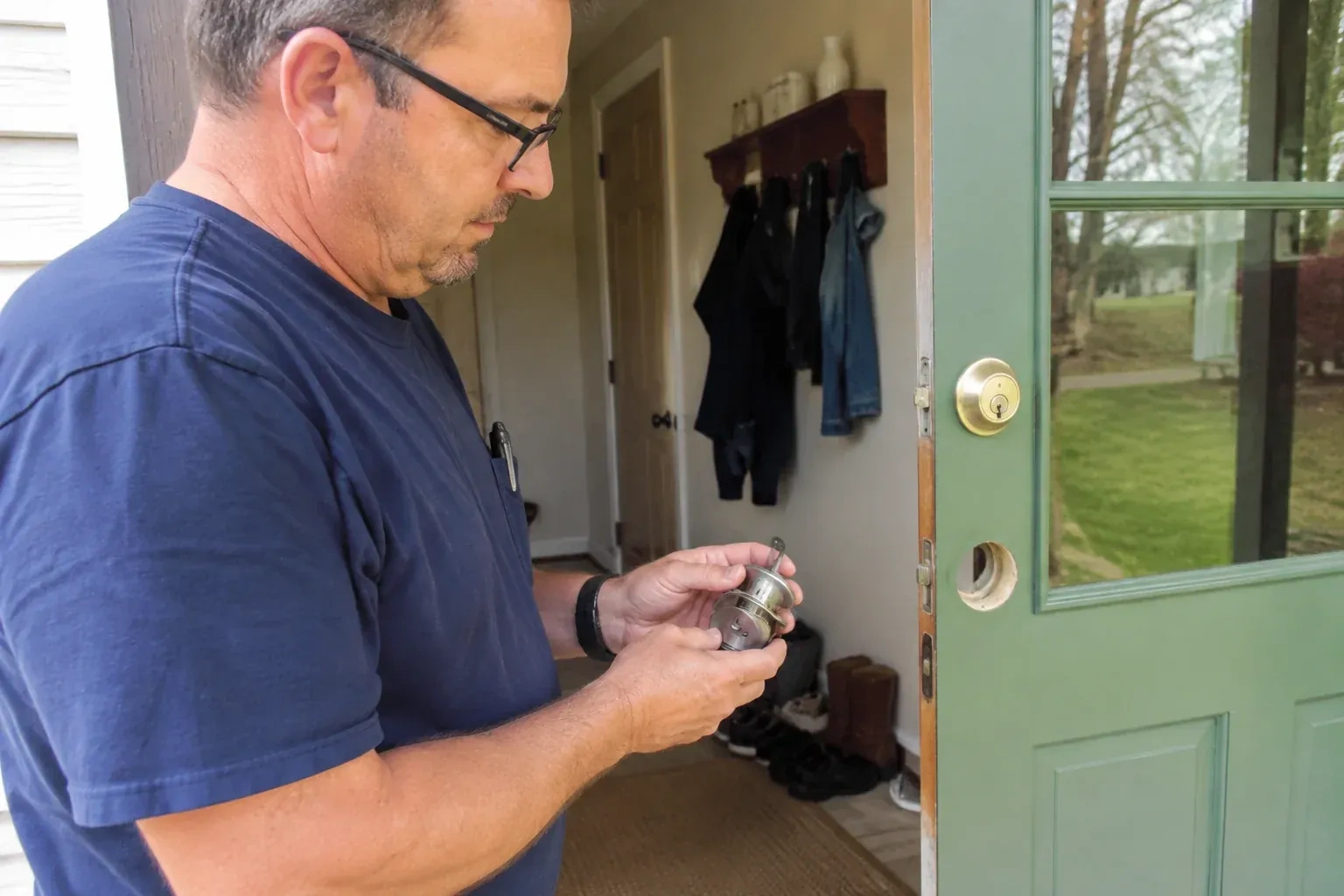
A jammed lock looks like one problem from outside and is usually one of three inside. The cylinder itself may have seized, packed with grit, corrosion or old grease. The link between cylinder and bolt, the tailpiece or cam, may have broken, which is why a key can spin without doing anything. Or the lock may be healthy and the bolt simply pinned against the strike by a door that has moved. Seized and jammed lock opening starts by telling those apart, because the right answer for one would damage the hardware in another. Once the culprit is known, the door is opened and the cause is repaired.
How the visit goesThe key slides all the way in, exactly as it has for years, and then refuses to turn in either direction. Yesterday it needed a small wiggle. This morning it feels set in concrete, and pushing harder only makes the key flex.
Dorchester
How the visit goes
The key in your hand
Before blaming the lock, the locksmith looks at the key. A key that has been copied from another copy several times drifts away from the true cuts, a worn key no longer lifts the pins to the shear line, and a bent key binds before it is fully seated. If an original or a rarely used spare exists, it is tried; a lock that opens with the spare has told you the problem. Some cylinders also retain the key until the plug is returned to its neutral position, and a key that seems trapped may simply be a plug that has not come back. A fresh key cut from the code is a common outcome.
Proving it with the door open and shut
The job is finished with testing rather than with the last screw. The bolt is thrown and drawn back with the door open to prove the lock itself, then with the door closed to prove the door and strike, then from the inside with the thumb-turn or lever. Every key you hold is tried, including the spare from the drawer. If the door is a main exit, the locksmith confirms it opens from inside with one motion and no key. Any hardware that was adjusted is cycled a dozen times to make sure it stays put, and the finish is wiped clean of cleaner and lubricant.
Set up for the freeze-thaw months
After a winter jam the cylinder has been dried and dressed with a lubricant that sheds moisture, and you know the routine for the next cold snap. A keyhole cover or a storm door keeps meltwater out of an exposed lock. A tube of de-icer in the car or coat pocket is the answer to a frosted cylinder, and boiling water is never the answer. Rinse salt spray off hardware near a treated driveway or walkway when the weather allows. Doors on the shaded side deserve a check after the first hard frost, because they hold ice long after the sunny side has cleared.
Seized & Jammed Lock Opening
In the van
- Electronic contact cleaner
- Key blanks and code cutter
- Replacement cylinder
- Long hinge screws
- Mortise case spring and hub
What affects the quote
Same fees day, night or weekend
1Service or replace the cylinder
A cylinder that can be stripped, cleaned and rebuilt is quoted as labour with a few small parts; one corroded through is quoted with a replacement cylinder matched to your finish and keyway.
2Type of lock on the door
A residential deadbolt, a knob latch, a lever set, a mortise case in an older house and a high-security cylinder each take different tools and time to open and to service.
3Which part is jammed
A bolt pinned by the door, a cylinder clogged with grit and a broken tailpiece are three different jobs with three different amounts of work, and the quote follows the diagnosis rather than the symptom.
Seized & Jammed Lock Opening: questions
Why do locks jam more in winter?
Two reasons meet in the same season. Freeze-thaw weather sends meltwater into the keyway by day and freezes it by night, and cold thickens any old grease or oil that has been sprayed into the pins. At the same time dry, heated indoor air shrinks wood doors so bolts move in their pockets. Doors on the shaded or windward side get the worst of it. A dry lubricant, a keyhole cover and a check of the strike after the first hard frost take care of most of it.
If the cylinder is replaced, can it be keyed to my existing key?
Often, yes. A replacement cylinder in the same keyway can be pinned to the cuts on the key already on your ring, so the front and back doors stay on one key and nothing else in the house changes. If the old keyway is no longer made or the key is badly worn, the new cylinder comes with fresh keys and the other doors can be rekeyed to match in the same visit.
What should I tell you on the phone?
Say what the key does: refuses to turn, spins without effect, or works only when the door is pushed or pulled. Name the lock type if you can, whether it is a deadbolt, knob, lever or an old mortise lock, and which side of the building the door faces. Mention recent weather, any spray that went into the keyway, any other door you can use, and whether anyone is inside. That short list decides the tools that come.
Lockout Services
Seized & Jammed Lock Opening near you
Residents and business owners in Dorchester can use this list to find the service that fits, then read what it involves before anyone comes out. Emergency openings are here. So are rekeys, lock changes, deadbolt and high-security upgrades, commercial door hardware, master keys, safes and key cutting.