High security · London
Safe Opening & Combination Change in London
Pry marks circle the dial after an overnight break-in attempt, and the safe now refuses every number that used to open it, as if something inside has locked itself down.
Safe Opening & Combination Change
In plain words
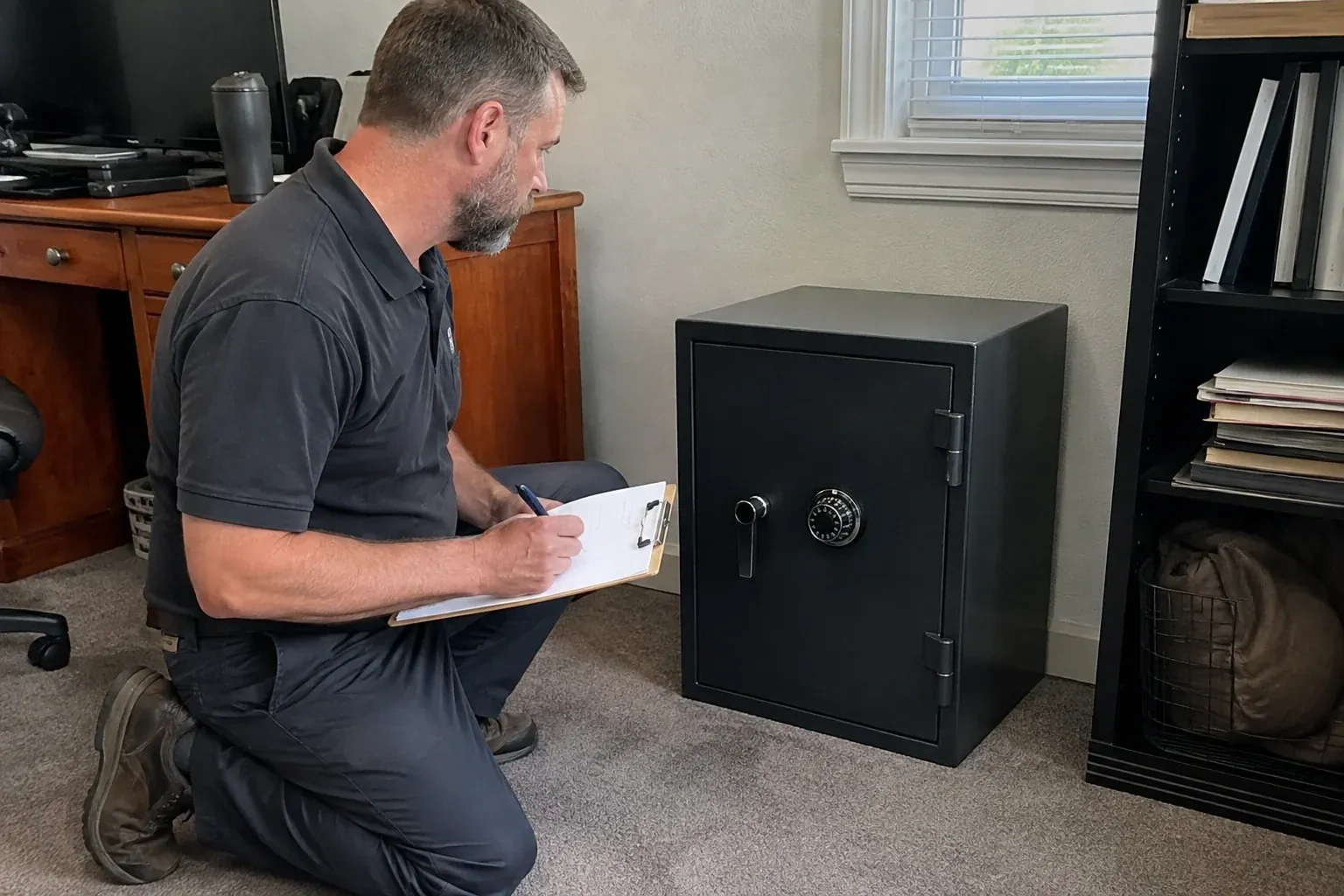
Once a safe is open, the visit is only half finished. The lock is inspected for wear, corrosion or damage that caused the original problem, repaired or replaced if it is no longer reliable, and then set to a new combination chosen on the spot. That combination is cycled several times with the door both open and closed so everyone leaves confident it will work again on the next ordinary morning, not just once under supervision.
How the visit goesThe pharmacy's drop safe has a keypad that finally lost power for good, and the little override key that was supposed to live behind the counter cannot be found anywhere.
London
How the visit goes
Confirming who has the authority to open it
Before any tool touches the safe, the locksmith establishes who has the right to be inside it. For a business this is usually straightforward: an owner, manager or authorized employee identifies themselves and their connection to the account. For an estate, a secondhand purchase or a change of ownership, proof such as a bill of sale, a property transfer or an executor's documentation fills the same role. This step is treated as routine good practice rather than an obstacle, because it protects the current owner from a later dispute over who authorized access to a safe's contents just as much as it protects anyone else with an interest in it.
Least invasive first, on every safe
Opening a safe is planned around the specific lock, its condition and what recovery options it actually has: manipulation or decoding for a mechanical dial, a manufacturer reset or override path for an electronic keypad where one exists, and drilling where the gentler routes are unavailable or exhausted. This order exists because a safe's lock, dial ring and case finish are the hardest parts to replace cleanly, so any method that leaves them intact is worth the extra time it takes. Working through the ladder in order, rather than jumping to the most direct option, is what keeps the great majority of safes leaving the visit with their original lock still in place.
A plan for the day this happens again
Most safes that needed a reset today will need one again eventually, whether from a future staff change, a forgotten code, or simple wear on an aging lock. Deciding now who is responsible for passing the combination along when roles change, keeping a written record somewhere secure, and having the safe's model and service history noted somewhere accessible all make the next visit shorter and simpler than this one. None of this is required before the locksmith leaves, but a few minutes spent on it now is the difference between a short reset next time and starting from an unknown safe all over again.
Safe Opening & Combination Change
In the van
- Borescope for internal viewing
- Manufacturer reset tool
- Electronic keypad input unit
- Manipulation and tension tools
- Replacement wheel pack
What affects the quote
Same fees day, night or weekend
1Contents that affect how carefully the opening proceeds
Cash, business records, prescription logs or firearms each carry their own handling expectations once the door opens, which can shape how the visit is planned and quoted.
2Damage from a prior break-in attempt
Pry marks, drill attempts or a tripped relocker from an earlier incident mean assessing and repairing that damage in addition to the combination work the visit was booked for.
3Whether model or service records are available
A visible data plate, a purchase receipt or a manual on hand speeds up identifying the exact lock; a safe with none of that takes a few extra minutes to assess on site.
Safe Opening & Combination Change: questions
When does a locksmith decide to drill a safe instead of opening it another way?
Drilling is chosen when the gentler options for that specific lock, manipulation and decoding on a mechanical dial, or a manufacturer reset or override on an electronic one, are unavailable or have not worked, rather than following one fixed order on every safe. It is also the answer when the lock has genuinely failed, such as a seized wheel pack or a dead circuit board with no working override. The decision is explained before drilling starts, not discovered afterward.
What if my safe is bolted to the floor or built into a wall?
The opening and combination work proceed the same way regardless of how the safe is mounted; access to the lock face, dial or keypad is what matters, not whether the case itself can be moved. A built-in or bolted safe simply means the locksmith works around its fixed position rather than moving it to a more convenient spot.
Should I change my safe's combination even if it still opens fine?
It depends on who still knows the old one. If a bookkeeper, manager or previous owner who had the combination is no longer with the business, resetting it closes that gap even though nothing about the lock itself has failed. A safe that only the current staff have ever known the code to generally does not need changing on that basis alone.
High Security Locks
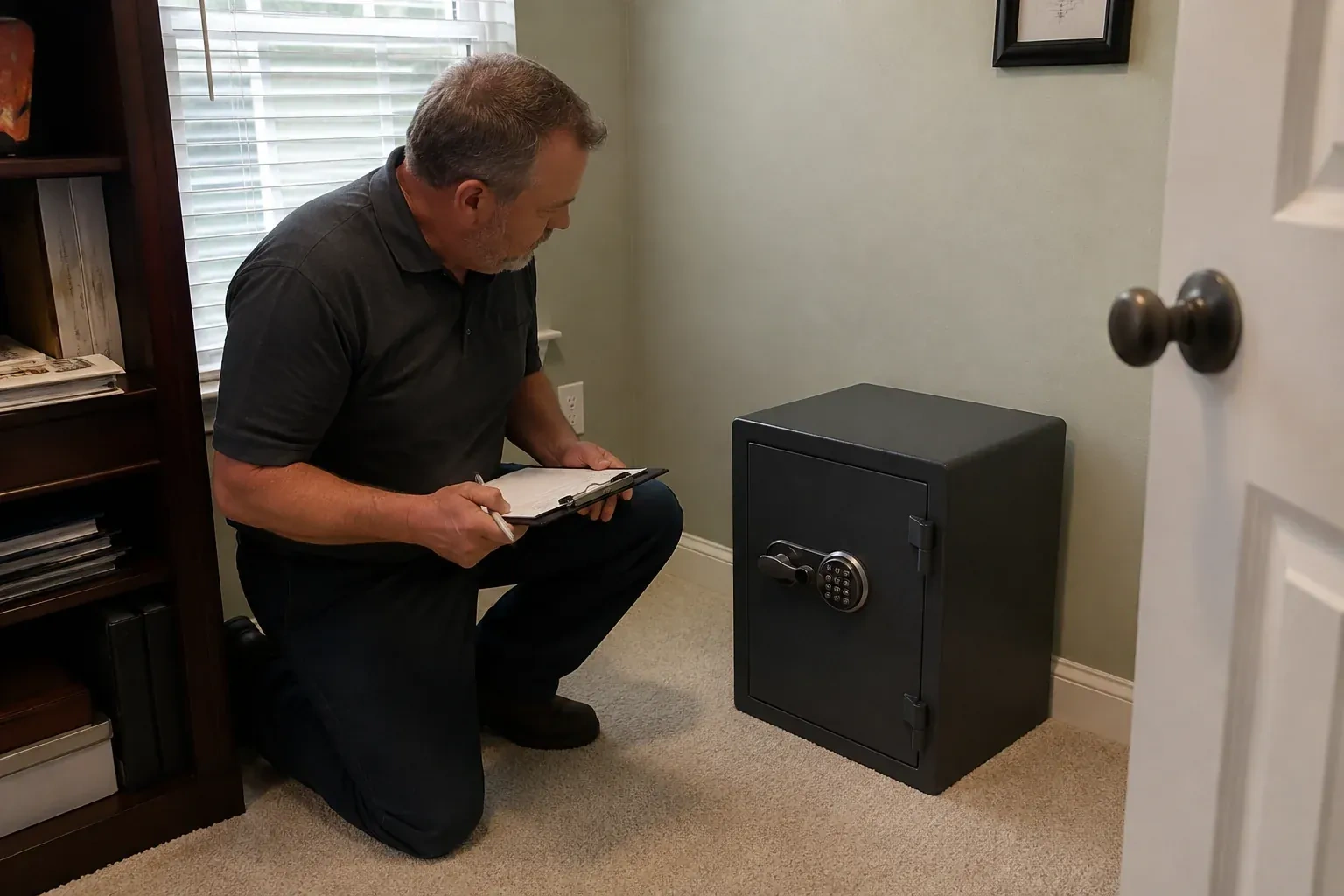
Safe Opening & Combination Change near you
Homes and businesses in London tend to need the same handful of things from a locksmith, so that is how the list is arranged: emergency openings, changing or rekeying locks, stronger hardware for people who want it, commercial doors and access, and safes. Car keys sit at the end for the households that need them.